

How to test the quality of a stainless steel male tee?
Jul 22, 2025
As a supplier of stainless steel male tees, ensuring the quality of our products is of utmost importance. In this blog post, I will share with you the various methods and considerations for testing the quality of a stainless steel male tee.
Visual Inspection
The first step in testing the quality of a stainless steel male tee is a thorough visual inspection. Start by examining the surface finish of the tee. A high - quality stainless steel male tee should have a smooth, uniform surface without any visible scratches, pits, or cracks. Scratches can compromise the integrity of the tee and may lead to corrosion over time.
Check the dimensions of the tee. The outer diameter, inner diameter, and length should be in accordance with the specified standards. Any significant deviation from the standard dimensions can cause problems during installation and may affect the performance of the entire piping system. Measure the wall thickness of the tee at multiple points. A consistent wall thickness is an indication of a well - manufactured product.
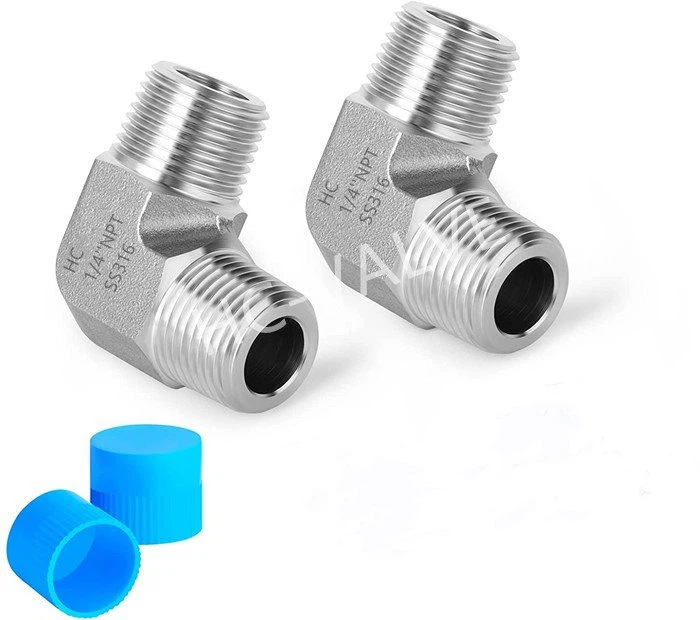

Inspect the threads on the male ends of the tee. The threads should be clean, sharp, and free from any burrs or damage. Damaged threads can make it difficult to connect the tee to other components in the piping system, and may also lead to leaks.
Material Analysis
Stainless steel is an alloy, and the quality of the stainless steel male tee depends largely on the composition of the alloy. There are several methods for material analysis.
One common method is the use of a spectrometer. A spectrometer can accurately determine the chemical composition of the stainless steel. It can detect the presence and percentage of elements such as chromium, nickel, and molybdenum, which are crucial for the corrosion resistance and strength of the stainless steel. For a high - quality stainless steel male tee, the chromium content should typically be around 16 - 26%, and the nickel content around 6 - 22%. These elements form a passive oxide layer on the surface of the stainless steel, protecting it from corrosion.
Another method is the spark test. Although not as accurate as a spectrometer, the spark test can provide a quick and rough indication of the type of stainless steel. Different grades of stainless steel produce different spark patterns when ground against a grinding wheel. For example, austenitic stainless steels produce short, dull sparks, while ferritic stainless steels produce long, bright sparks.
Pressure Testing
Pressure testing is a crucial step in ensuring the integrity of the stainless steel male tee. The tee should be able to withstand the maximum operating pressure of the piping system without leaking or failing.
There are two main types of pressure tests: hydrostatic testing and pneumatic testing. Hydrostatic testing involves filling the tee with water and applying pressure. The pressure is usually maintained for a certain period, typically 10 - 30 minutes, to check for any leaks. Pneumatic testing, on the other hand, uses compressed air or gas instead of water. However, pneumatic testing is more dangerous than hydrostatic testing because of the potential for explosive decompression in case of a failure.
During the pressure test, carefully inspect the tee for any signs of deformation, bulging, or leakage. Even a small leak can be a sign of a serious problem, such as a crack or a weak weld. If any issues are detected during the pressure test, the tee should be rejected.
Corrosion Resistance Testing
Since stainless steel is known for its corrosion resistance, testing the corrosion resistance of the male tee is essential. One common method is the salt spray test. In this test, the tee is placed in a chamber where it is exposed to a fine mist of saltwater. The duration of the test can vary depending on the specific requirements, but it is usually several hours or even days. After the test, the tee is examined for any signs of corrosion, such as rust or pitting.
Another method is the immersion test. The tee is immersed in a corrosive solution, such as a solution of sulfuric acid or hydrochloric acid, for a certain period. The solution is then analyzed to determine the amount of corrosion that has occurred.
Weld Quality Testing (if applicable)
If the stainless steel male tee is a welded product, the quality of the welds is crucial. Welds should be inspected visually for any signs of porosity, cracks, or lack of fusion. Non - destructive testing methods, such as ultrasonic testing or radiographic testing, can also be used to detect internal defects in the welds.
Ultrasonic testing uses high - frequency sound waves to detect flaws in the weld. A transducer is placed on the surface of the weld, and the sound waves are transmitted into the weld. Any defects in the weld will cause the sound waves to reflect differently, which can be detected by the ultrasonic testing equipment. Radiographic testing, on the other hand, uses X - rays or gamma rays to create an image of the internal structure of the weld. This method can provide a detailed view of any internal defects in the weld.
Compatibility Testing
A stainless steel male tee may need to be connected to other components in the piping system, such as stainless steel street elbow, stainless coupling nut, and Stainless Steel reducing adapter. Compatibility testing is necessary to ensure that the tee can be connected properly and that there are no issues such as galvanic corrosion when different metals are in contact.
To test compatibility, the tee can be connected to the other components and then subjected to a simulated operating environment. The connection should be checked for any signs of leakage, looseness, or corrosion over a period of time.
Conclusion
Testing the quality of a stainless steel male tee is a comprehensive process that involves visual inspection, material analysis, pressure testing, corrosion resistance testing, weld quality testing (if applicable), and compatibility testing. By following these testing procedures, we can ensure that our stainless steel male tees meet the highest quality standards.
If you are in the market for high - quality stainless steel male tees, I invite you to contact us for more information and to discuss your specific requirements. We are committed to providing you with the best products and services.
References
- ASME B16.9 - Factory - Made Wrought Buttwelding Fittings
- ASTM A312/A312M - Standard Specification for Seamless, Welded, and Heavily Cold Worked Austenitic Stainless Steel Pipes
- ISO 9001:2015 - Quality management systems - Requirements