

What is the thread type of a stainless steel female tee?
Nov 24, 2025
Hey there! As a supplier of Stainless Steel Female Tees, I often get asked about the thread types of these handy little fittings. So, I thought I'd take a few minutes to break it down for you and give you a better understanding of what's out there.
First off, let's talk about what a Stainless Steel Female Tee actually is. It's a type of pipe fitting that has three openings in a T-shape. The "female" part means that the openings have internal threads, which are designed to connect with male-threaded pipes or other fittings. These tees are commonly used in plumbing, industrial piping systems, and even in some DIY projects.

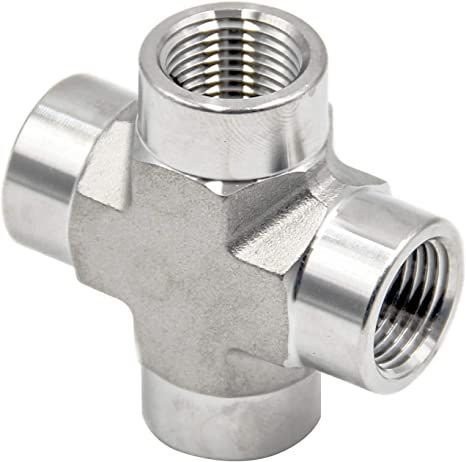
Now, onto the thread types. There are several different thread types for Stainless Steel Female Tees, each with its own unique characteristics and uses.
NPT (National Pipe Tapered) Threads
NPT threads are one of the most common thread types you'll come across. They're used in a wide range of applications, from residential plumbing to industrial piping. The main feature of NPT threads is that they're tapered, which means the diameter of the thread gets smaller as you move along the length of the pipe. This taper helps create a tight seal when the fitting is tightened onto a male-threaded pipe.
The taper of NPT threads is 1/16 inch per inch of length. This might not seem like much, but it's enough to ensure a good seal. However, it's important to note that NPT threads aren't designed to be a perfect seal on their own. You usually need to use some sort of sealing compound, like Teflon tape or pipe dope, to prevent leaks.
BSP (British Standard Pipe) Threads
BSP threads are another popular option, especially in Europe and other parts of the world. There are two main types of BSP threads: BSPP (British Standard Pipe Parallel) and BSPT (British Standard Pipe Tapered).
BSPP threads are parallel, which means the diameter of the thread stays the same along the length of the pipe. These threads are often used with gaskets or O-rings to create a seal. They're commonly found in applications where a high-pressure seal isn't required.
BSPT threads, on the other hand, are tapered, similar to NPT threads. However, the taper of BSPT threads is slightly different, at 1/16 inch per 28 threads. This means that BSPT and NPT threads aren't interchangeable, so you need to make sure you're using the right type for your application.
Metric Threads
Metric threads are used in many countries around the world, especially in industries that follow the metric system. These threads are defined by their pitch (the distance between each thread) and their diameter. For example, a common metric thread size might be M10 x 1.5, where M10 is the diameter of the thread and 1.5 is the pitch.
Metric threads are available in both parallel and tapered versions, depending on the application. They're often used in precision engineering and automotive applications, where a high degree of accuracy is required.
Other Thread Types
There are also some other less common thread types that you might come across, such as UNF (Unified Fine) and UNEF (Unified Extra Fine) threads. These threads are used in specific applications, usually in the aerospace and automotive industries.
So, how do you choose the right thread type for your Stainless Steel Female Tee? Well, it really depends on your application. If you're working on a residential plumbing project in the United States, NPT threads are probably your best bet. If you're working on an international project or in an industry that uses the metric system, metric threads might be more appropriate.
It's also important to consider the pressure and temperature requirements of your application. Some thread types are better suited for high-pressure or high-temperature environments than others. For example, NPT threads are generally good for moderate to high-pressure applications, while BSPP threads are better for lower-pressure applications.
Another thing to keep in mind is compatibility. Make sure the thread type of your Stainless Steel Female Tee matches the thread type of the pipes or other fittings you're connecting it to. Using the wrong thread type can lead to leaks, which can be a real headache.
As a supplier of Stainless Steel Female Tees, I can help you choose the right thread type for your needs. I have a wide range of tees available in different thread types, sizes, and materials. Whether you need a small tee for a DIY project or a large tee for an industrial application, I've got you covered.
If you're in the market for other stainless steel pipe fittings, I also offer stainless coupling nut, Stainless Steel Male Tee, and High pressure thread Cross. These fittings are made from high-quality stainless steel and are designed to provide a reliable and long-lasting connection.
So, if you're interested in learning more about Stainless Steel Female Tees or any of my other products, don't hesitate to reach out. I'm here to answer your questions and help you find the right fittings for your project. Whether you're a professional plumber, an industrial engineer, or a DIY enthusiast, I can provide you with the products and expertise you need.
In conclusion, understanding the thread type of a Stainless Steel Female Tee is crucial for ensuring a proper and leak-free connection. By choosing the right thread type for your application and making sure it's compatible with your pipes and other fittings, you can avoid costly leaks and ensure the long-term performance of your piping system.
If you have any questions or need further information, feel free to contact me. I'm always happy to help you with your pipe fitting needs.
References
- "Pipe Fittings Handbook" - A comprehensive guide to different types of pipe fittings and their applications.
- "Plumbing Codes and Standards" - A reference for understanding the regulations and requirements for plumbing installations.
- Manufacturer's specifications for Stainless Steel Female Tees and other pipe fittings.